
Dutch Holly is a two-person electronic indie pop act, but the live show is not a DJ set and it is not simply the studio master played back onstage. Jen Juniper and Tres Ikner use live vocals, percussion, guitar, keyboards, MIDI programming, effects, programmed rhythms, samples, and live looping to rebuild the songs in performance.
What “live electronic” means for Dutch Holly
Electronic music can mean a lot of different things onstage. For Dutch Holly, it means using electronic instruments and systems as part of a live band performance. Synthesizers, programmed rhythm, samples, MIDI control, effects, and looping sit alongside voices, guitar, percussion, and keyboards. The electronics expand what two people can do; they do not replace the two people.
That distinction matters. Dutch Holly’s songs begin as songs, and the live arrangement is built around performance rather than around a DJ set. Some material is prepared or sequenced because the studio arrangements contain layers that cannot all be played simultaneously by two musicians. Other parts are sung, played, triggered, shaped, and looped in real time. The balance changes from song to song.
Two people, full arrangements
Jen Juniper
- Lead vocals
- Live percussion and electronic drum-pad performance
- Songwriting and arrangement decisions carried from the original songs into the live versions
- Layered vocal parts and harmonies within the live production
Tres Ikner
- Guitar and keyboards
- Backing vocals
- MIDI programming, effects, and live looping
- Operation of the duo’s live-production and monitoring system
Together, the two performers create a full electronic arrangement from a compact stage setup. The result can move from dream-pop atmosphere and downtempo restraint to dance-driven indietronica, new-wave guitar textures, and more expansive electronic passages without changing the basic two-person format.
What is played live, and what is programmed?
Dutch Holly does not pretend that every sound in a layered electronic arrangement is physically played from scratch onstage. The live system includes programmed rhythms, samples, keyboard layers, and processed vocal elements routed through the duo’s front-of-house rack. Those elements are part of the arrangement.
At the same time, the performance itself is built around live vocals, guitar, percussion, electronic drum-pad parts, keyboards and MIDI control, plus loops that can be created or manipulated during the song. The prepared elements provide structure; the live parts provide the interpretation. That is why the show can remain recognizably Dutch Holly without being a note-for-note recreation of the record.
For engineers and talent buyers who want the signal flow rather than the philosophy, the full input list, stage plot, monitoring details, and sound requirements are on the Booking Details page.
Live looping: why the songs can change
Live looping is one of the tools that lets the arrangements breathe. A guitar figure, vocal texture, rhythmic part, or other musical phrase can become another layer in the performance instead of remaining fixed to the studio version. That gives Dutch Holly room to extend sections, change density, and let songs evolve over time.
“Funny Girl” is the clearest example. The song first appeared during the duo’s 2015 Outlaw era. Years of live performance added synth textures, guitar loops, and vocal samples until the stage arrangement had moved far beyond the original recording. The 2026 Funny Girl (11th Anniversary Edition) was recorded to capture what the song had become in performance.
“Spirit Eyes” traveled the opposite route: Jen originally wrote it on acoustic guitar years before Dutch Holly recorded it. In the current arrangement, her vocal melody and composition sit inside an electronic framework with guitar, keys/bass, and programmed drums. The song remains the same composition, but the production language changes what that composition can do onstage.
Electronic music without a turntable
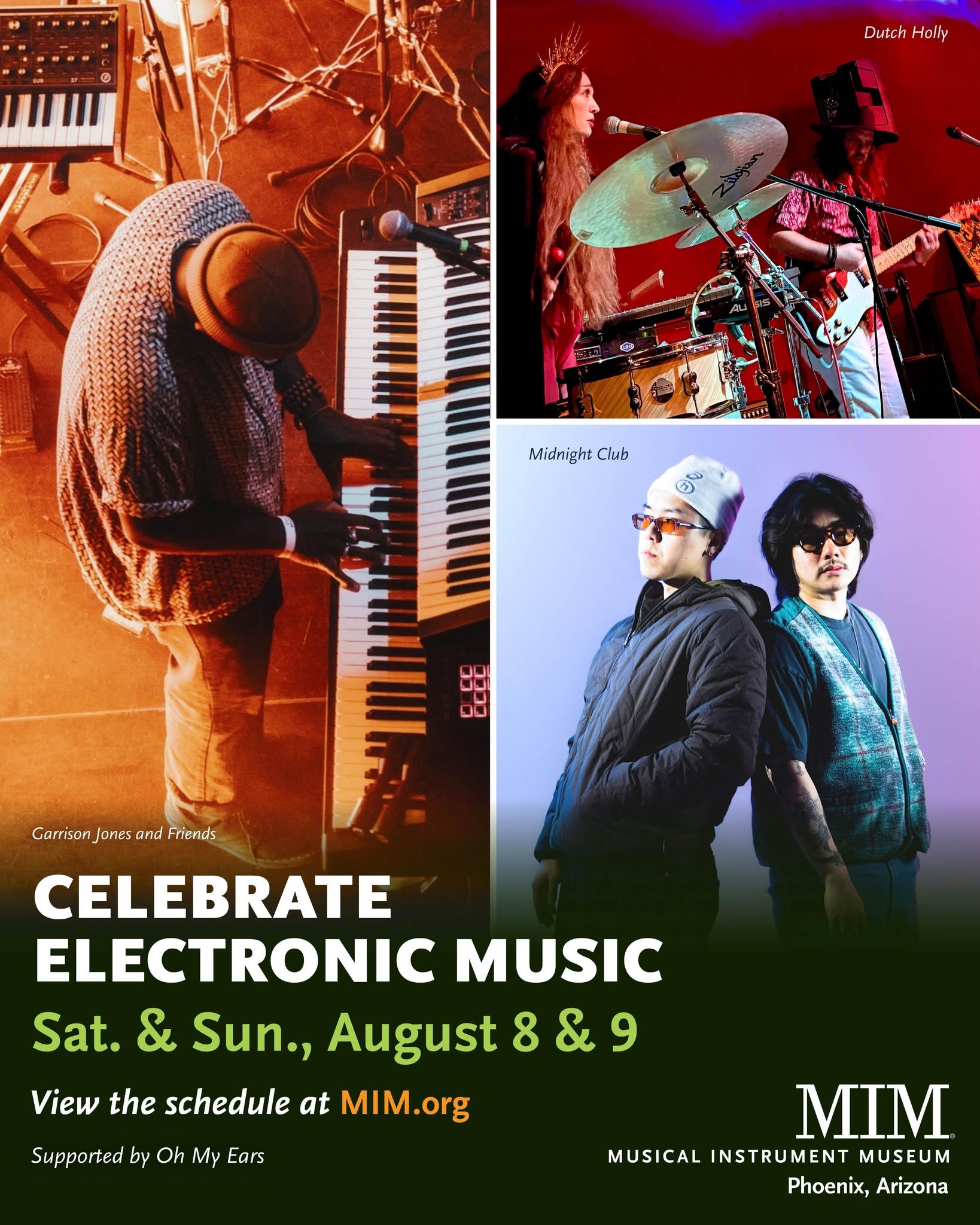
In August 2026, the Musical Instrument Museum featured Dutch Holly in its Celebrate Electronic Music program, describing the duo as an Arizona indietronica act with dreamy soundscapes and danceable grooves.
A Phoenix New Times feature used Dutch Holly as an example of electronic music that is not synonymous with DJs or EDM: synths, programmed beats, looping effects, guitar, and indie-pop songwriting functioning together as one live performance language.
From the studio to the stage
Dutch Holly’s studio recordings journey through electronic indie pop, dream pop, indietronica, trip-hop, synth-pop, art rock, and dance-oriented material. The live challenge is not to reproduce every studio layer literally; it is to preserve the song’s identity while deciding which parts should be performed, which should be programmed, and where live interaction can make the arrangement more immediate.
That approach is also why a song can keep changing after release. A live arrangement may reveal a better guitar texture, a stronger rhythm, a useful loop, or a new way for the voices to interact. Sometimes those discoveries remain part of the show. Sometimes, as with “Funny Girl,” they eventually reshape the recording itself.
Watch Dutch Holly perform live
Miami, Arizona — “Funny Girl” live
Phoenix, Arizona — Holopalooza 2
Prescott, Arizona — Pure Imagination Festival
More live clips and official videos are available on the Dutch Holly Videos page.
Booking Dutch Holly as a live electronic act
Dutch Holly is based in Prescott and performs throughout Arizona and the American Southwest. The compact two-person format is designed for clubs, festivals, arts and cultural programming, listening rooms, galleries, and other events looking for an original live electronic performance rather than a DJ set.
The duo travels with its own in-ear monitoring and live-production system and can provide and operate sound for smaller venues by advance arrangement. Technical requirements, stage plot, input list, set lengths, and contact information are available on the booking page.